The Nose Appears as a State Councillor
The NoseThe Nose Appears as a State Councillor is the central public reversal in Major Platon Kovaloff’s search for his missing nose: the body part he has lost appears in the streets of St Petersburg as a uniformed official of higher rank. Its confident public identity contrasts with Kovaloff’s distress and turns his dependence on status into the scene’s governing irony. The nose does not merely escape him; it enters the social world on terms that seem to make it his superior.
Background and Stakes
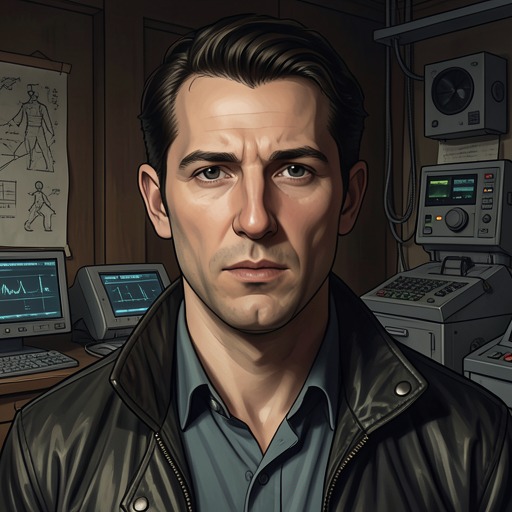
Kovaloff’s alarm follows a discovery made with a small mirror: where his nose should be, his face has become a smooth, broad vacancy. The loss threatens more than his appearance. Formerly a Caucasian committee-man, he insists on being called Major, having come to St Petersburg hoping for a position suited to his rank—preferably vice-governor, though he would accept a departmental post. He is also willing to marry, provided a prospective wife brings a dowry of two hundred thousand roubles. His anxiety over the missing feature therefore collides with carefully maintained ambitions and the public identity he has built around his title.
That identity is performed in small, visible details. Kovaloff walks daily along the Neffsky Avenue, wears a remarkably clean, stiff shirt collar, and displays seals, some bearing armorial bearings and others the names of the days of the week. The narrator explains that he calls himself Major rather than committee-man to enhance his importance. When he sees a woman he finds attractive, he adjusts his collar, arranges his seals, and smiles—only to remember that his face is blank where his nose belongs.
The Nose’s Public Appearance
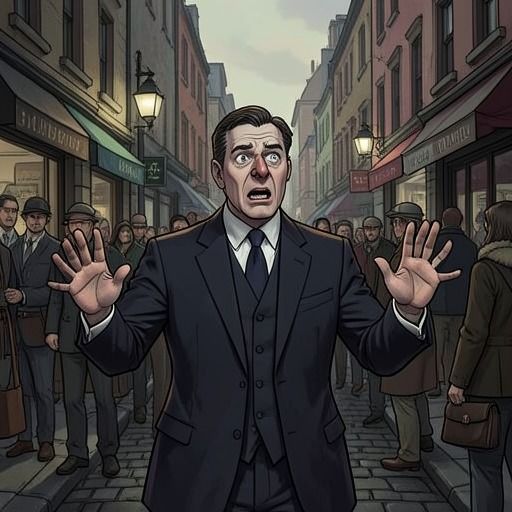
With no droshky in sight, Kovaloff sets out on foot, holding a handkerchief to his face as though his nose were bleeding. He pauses at a confectioner’s shop to inspect himself in a mirror; the sight confirms that there is nothing where his nose should be. Leaving in vexation, and uncharacteristically avoiding the people in the street, he stops before a doorway as a carriage arrives. A uniformed gentleman hurries inside. Kovaloff recognizes him as his own nose.
After about two minutes, the nose emerges again in a gold-embroidered uniform, a stiff high collar, chamois-leather trousers, and a sword. A plume on its hat indicates the rank of state councillor. It looks around, orders the coachman to drive, and departs in its carriage on what appears to be a round of duty calls. Kovaloff, trembling and barely able to stand, follows it to a short distance from the Grand Bazar of Moscow. There he sees it standing before a shop, partly hidden by its stiff collar and intent on the displayed wares.
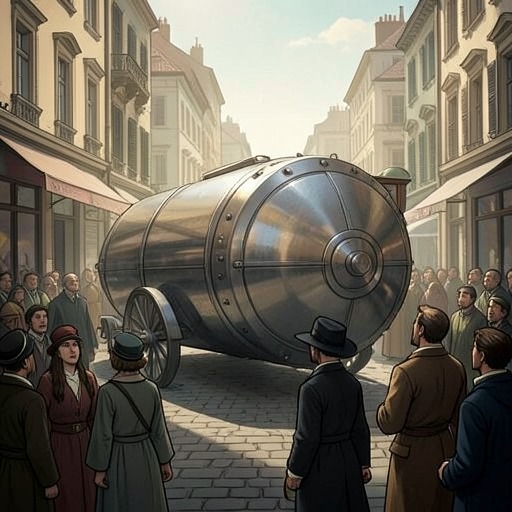
The setting sharpens the spectacle: this is not a private vision but an apparent public outing amid streets, shops, carriages, and passers-by. Kovaloff initially cannot decide how to approach the nose. Its uniform and hat seem to establish its higher official standing, while the sight of his own feature moving through the city overturns the ordinary relationship between a person and his body. The nose is no longer simply an absence to be concealed; it is a figure that can travel, make calls, and command a coachman.
Confrontation and Social Reversal
Kovaloff coughs discreetly near the nose, but it pays him no attention. When he addresses it, he insists that it is his own nose. The nose replies that Kovaloff is mistaken, asserts that it is itself, and says that they cannot have close relations. Judging by the buttons on Kovaloff’s uniform, it adds, they belong to different departments, then turns away.
The exchange gives bureaucratic rank the force of a barrier between the body part and the person from whom it has separated. Kovaloff’s claim rests on physical origin; the nose answers with institutional identity, treating its uniform and department as more decisive than their bodily connection. Its refusal is therefore both absurd and socially legible: the same official distinctions that Kovaloff uses to elevate himself now deny him access to his own nose.
Kovaloff’s attempt to resume his social performance is interrupted when an elderly woman and her graceful daughter approach. He adjusts his collar and seals and fixes his attention on the daughter, but remembers that he has no nose and that his face is an absolute blank. He turns to accuse the uniformed figure of being merely a state councillor in appearance and really his own nose, only to find that it has vanished. Its departure leaves him in despair beneath a colonnade. Although he remembers the plume and gold-embroidered uniform, he has failed to observe the carriage, horses, cloak, or any attendant closely enough to identify them among the passing traffic.
Aftermath and Significance
The encounter begins a search through ordinary institutions, none of which readily accommodates Kovaloff’s extraordinary account. At the newspaper office, he asks for an advertisement offering a reward to anyone who can bring the runaway back, but tries to conceal his identity: he has female acquaintances, including Madame Podtotchina, and fears they will hear of his condition. The official refuses to print the notice, citing the paper’s reputation and a previous advertisement about a lost black-haired poodle that had served as satire on an establishment’s cashier. Kovaloff insists that his case concerns his own nose, almost himself, but the office will not publish it.
His visit to the police commissary brings another refusal. The commissary receives him coldly, says that respectable people do not have their noses stolen, and implies that the afternoon is a time for rest rather than handling a case. Because Kovaloff is acutely sensitive to insults against rank and social position, he leaves with dignity rather than accept the slight. Later, when the doctor examines the vacant place, repeated tests end in the judgment that replacement cannot be done and might make matters worse. These responses extend the scene’s governing contrast: the nose can apparently exercise public authority as a state councillor, while the man whose body it came from cannot make his loss legible to the officials and professionals he approaches.
The episode’s comedy rests on a precise reversal of recognition. Kovaloff depends on titles, dress, seals, and advantageous connections to make himself visible as a person of consequence; the nose, detached from him, appears to possess even greater consequence. Its departmental distinction dismisses the most intimate possible relationship, while Kovaloff’s efforts to recover it repeatedly founder on the conventions of public respectability. The missing feature is at once a bodily loss and a crisis in the social identity he has worked to display.